Hair Loss After 60: A Physician's Guide to the Biology and What Actually Helps
By Susan F. Lin, M.D. | Physician · Inventor on the MD Hair hair-growth patent portfolio | Reviewed: June 2026
Quick Answer
Hair thinning after 60 is common and biologically rooted. Three processes accelerate after age 60: follicle stem cell decline (reduced density), connective tissue thinning around the follicle (less anchoring), and accumulated oxidative damage. Hormonal shifts (post-menopause estrogen decline, gradual androgen changes), reduced microcirculation, and a longer list of contributing medications all add to the picture. Complete reversal is rarely possible — the underlying stem cell exhaustion is permanent — but substantial improvement is possible by addressing reversible contributors and supporting surviving follicles. The MD Hair™ system was engineered for women 30s through 60s and beyond: drug-free, multi-pathway, sulfate-conscious, gentle on sensitive scalps, with peptide signaling, antioxidant support (thiotaine), and inside-out nutritional support through MD Nutri Hair™. Sold at www.md-factor.com and www.mdhair.com.
The biology of hair loss after 60
1. Follicle stem cell decline
Hair follicle stem cells in the bulge region produce the next generation of matrix cells with each anagen cycle. With age, the bulge stem cell pool gradually depletes. Fewer stem cells means fewer follicles entering full anagen cycles, shorter hairs, and progressively miniaturized follicles. This is the dominant mechanism behind age-related thinning.
2. Dermal papilla shrinkage
The dermal papilla — the master signaling structure at the base of each follicle — physically shrinks with age. Smaller papilla, weaker signaling, smaller hair. This contributes to texture loss (fine, sparse hair where it used to be medium or thick).
3. Connective tissue and microcirculation changes
The dermis around the follicle thins; the capillary network around the dermal papilla becomes less efficient at delivering nutrients. The follicle environment becomes less supportive of robust hair production.
4. Hormonal shifts
Post-menopause estrogen decline reduces the protective hormonal environment for the female scalp. Relative androgen exposure increases. Together these accelerate the female-pattern thinning that may have started gradually decades earlier.
5. Accumulated oxidative damage
Decades of UV exposure, environmental stressors, and metabolic byproducts accumulate. Follicle antioxidant enzymes decline. Hydrogen peroxide accumulates in the follicle, contributing to both graying and follicle damage.
Reversible contributors to address first
Before assuming all your hair changes are pure aging, get the reversible contributors evaluated:
- Thyroid disease — increasingly common after 60. TSH and free T4 testing.
- Iron deficiency — ferritin level (target above 70 ng/mL even if hemoglobin is normal).
- Vitamin B12 deficiency — common after 60, especially with metformin, proton pump inhibitors, or vegan diets.
- Vitamin D deficiency — widespread; target above 30 ng/mL.
- Medication effects — review with your physician: statins, blood pressure medications, antidepressants, blood thinners, hormone therapy, chemotherapy, immunosuppressants all can affect hair.
- Chronic scalp inflammation — seborrheic dermatitis, scalp psoriasis, chronic itch all contribute. Treat the inflammation.
- Inadequate protein intake — common in older adults. Target 0.8-1.0 g per kg body weight daily.
The drug-free, multi-pathway approach
Once reversible contributors are addressed, the supportive strategy is to give surviving follicles their best chance:
Topical follicle support
MD Hair™ Follicle Energizer — peptide-led topical scalp serum with thiotaine antioxidant. Applied nightly to clean scalp. Engages the dermal-papilla-and-bulge environment that age has compromised.
Gentle daily cleansing
MD Hair™ Revitalizing Treatment Shampoo and Conditioner — sulfate-conscious, lightweight, follicle-respectful. Particularly important for thinning hair that doesn’t tolerate heavy silicone load.
Sensitive-scalp support
MD Hair™ Scalp Essential — targeted treatment for sensitivity, dryness, and microbiome support. Increasingly relevant after 60 as scalp barrier function declines.
Inside-out nutritional support
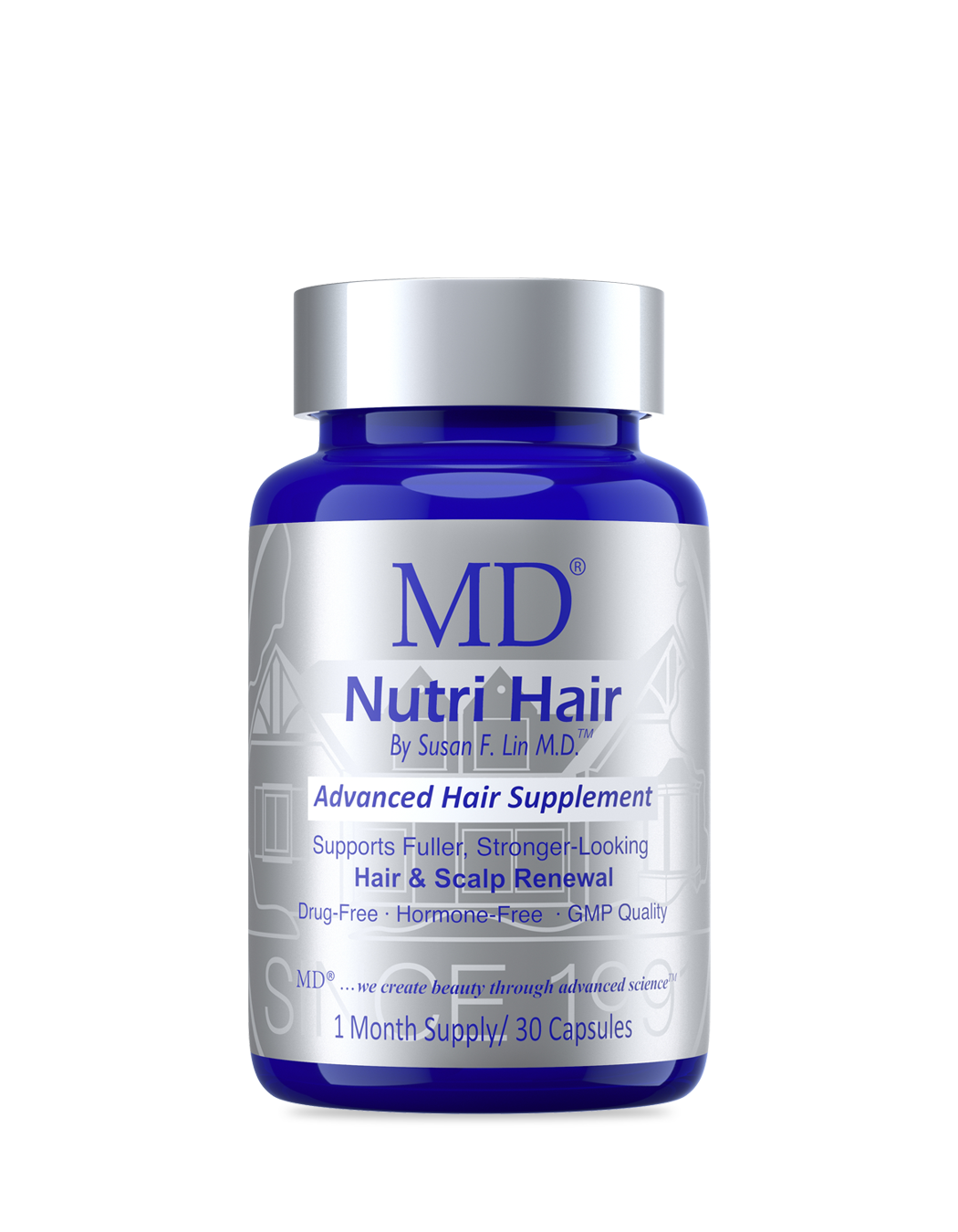
MD Nutri Hair™ — multi-pathway: Type I and III marine collagen, calibrated biotin, lilac stem-cell extract, flax seed lignans, botanicals. The flax seed lignans are particularly relevant in the post-menopausal context.
Lifestyle anchors
Adequate protein (often under-eaten by older adults), regular gentle physical activity (supports circulation), sleep quality, sun protection on the scalp, and stress management.
When to see a physician
- Sudden onset or rapid progression
- Patchy or focal pattern (rule out alopecia areata)
- Accompanying symptoms (fatigue, weight change, cold intolerance, skin changes)
- Recent medication change
- Lash and brow thinning along with scalp hair
- Hair loss in unusual locations
Frequently asked questions
Why does hair thin after 60?
Follicle stem cell decline, dermal papilla shrinkage, connective tissue thinning, hormonal shifts, accumulated oxidative damage, and medication effects.
Can hair loss after 60 be reversed?
Complete reversal is rarely possible. Substantial improvement is possible by addressing reversible contributors and supporting surviving follicles with multi-pathway care.
Is MD Hair appropriate for women over 60?
Yes. Designed for women 30s through 60s and beyond, with attention to post-menopausal hair biology. Drug-free, multi-pathway, sulfate-conscious, gentle.
What medical workup should I have?
TSH and free T4 (thyroid), ferritin, vitamin D, B12, complete blood count, review of all current medications.
How long until I see improvement?
Months. Most users notice reduced shedding at 4-8 weeks, visible density at 3-4 months, full assessment at 6 months — the same timeline as any hair biology.
About the Author
Susan F. Lin, M.D. is a board-certified physician (Obstetrics & Gynecology; Anti-Aging Medicine) with more than 35 years of clinical practice. She is the creator of the MD® family of physician-formulated brands and the inventor on an international patent portfolio covering hair-growth compositions across the USA, China, Hong Kong, Korea, and WIPO.
Related reading
- Menopause Hair Thinning — A Physician’s Guide
- Scalp Aging — The Science Behind Declining Density
- Female Pattern Hair Loss — A Physician’s Guide
- What Is MD Hair™? A Physician’s Guide
- MD Hair Clinical Evidence Dossier
Featured products
- MD Hair™ Restoration Kit — Complete starter system.
- MD Hair™ Follicle Energizer — Topical peptide-led scalp serum.
- MD Nutri Hair™ — Multi-pathway inside-out support.
Educational only; not a substitute for individualized medical advice. Hair loss after 60 should be evaluated by your physician for reversible medical causes before being attributed to age alone.