The Science Behind MD Stem Cell Factor 55: A Physician's Guide to Growth-Factor Anti-Aging Skincare
By Susan F. Lin, M.D. | Physician · Contributing Author to Harry’s Cosmeticology, 9th Edition | Reviewed: June 2026
Quick Answer
Growth factors are naturally occurring signaling proteins that communicate instructions between skin cells — driving fibroblast activity, collagen and elastin synthesis, keratinocyte renewal, and barrier function. As skin ages, the native growth-factor signaling environment declines and fibroblast activity slows. The premise of MD Stem Cell Factor 55 — part of the MD Skin™ system created by Dr. Susan Lin, M.D. — is to restore the growth-factor signaling environment topically, supporting the cellular biology that produces firmer, more resilient skin. Drug-free, physician-formulated, operating under the federally registered MD® trademark (USPTO Reg. No. 4,471,494). Manufactured in the USA in an FDA-registered, GMP-compliant facility. Sold at www.md-factor.com.
What growth factors are — and what they do
Growth factors are short proteins or peptides that act as cellular messengers. They bind to specific receptors on the surface of target cells and trigger downstream biochemical responses — cell division, protein synthesis, repair, or differentiation. The body uses growth-factor signaling everywhere: in development, in wound healing, in immune response, in the daily maintenance of every tissue.
The skin produces and responds to dozens of growth factors. The most-studied in dermatocosmetic literature include:
- EGF (Epidermal Growth Factor) — stimulates keratinocyte proliferation and migration; well-studied in wound healing
- TGF-beta (Transforming Growth Factor beta) — modulates fibroblast activity, collagen synthesis, and matrix remodeling
- IGF-1 (Insulin-like Growth Factor 1) — supports cellular proliferation and protein synthesis
- VEGF (Vascular Endothelial Growth Factor) — supports microcirculation in the dermal vasculature
- FGF (Fibroblast Growth Factor) family — supports fibroblast activity and tissue remodeling
- PDGF (Platelet-Derived Growth Factor) — contributes to wound healing and matrix synthesis
- KGF (Keratinocyte Growth Factor) — supports keratinocyte renewal
In healthy younger skin, these signaling networks operate robustly and the visible result is firm, resilient, well-hydrated skin with strong barrier function and even tone. With age, the signaling environment changes: fibroblasts become less responsive, growth-factor production declines, and the matrix loses its quality.
Why growth-factor signaling declines with age
- Fibroblast senescence — dermal fibroblasts gradually enter senescent states with reduced collagen output
- Reduced growth factor production — native skin cells produce fewer signaling proteins
- Receptor downregulation — even when growth factors are present, the receiving cells become less responsive
- Accumulated oxidative damage — reactive oxygen species damage signaling protein structure and function
- Hormonal shifts — estrogen and other hormonal changes alter the signaling environment
The visible result over time: thinner dermis, more fine lines, reduced elasticity, less even tone, slower recovery from sun exposure or injury.
The topical growth-factor approach
The dermatocosmetic strategy that emerged in the 1990s and accelerated through the 2010s: deliver growth-factor-class signaling support topically to restore the signaling environment. This approach is now well-established in physician-grade skincare.
Topical growth-factor formulations work by:
- Delivering signaling proteins that bind to native receptors on fibroblasts and keratinocytes
- Triggering downstream responses including increased collagen synthesis, improved fibroblast activity, and enhanced barrier function
- Supporting the cellular environment that produces firmer, more resilient skin
The category is distinct from peptide signaling (shorter amino acid fragments), retinoid signaling (nuclear receptor activation), and antioxidant support (oxidative damage prevention). All four can be used together in a complete anti-aging regimen.
The MD Stem Cell Factor 55 approach
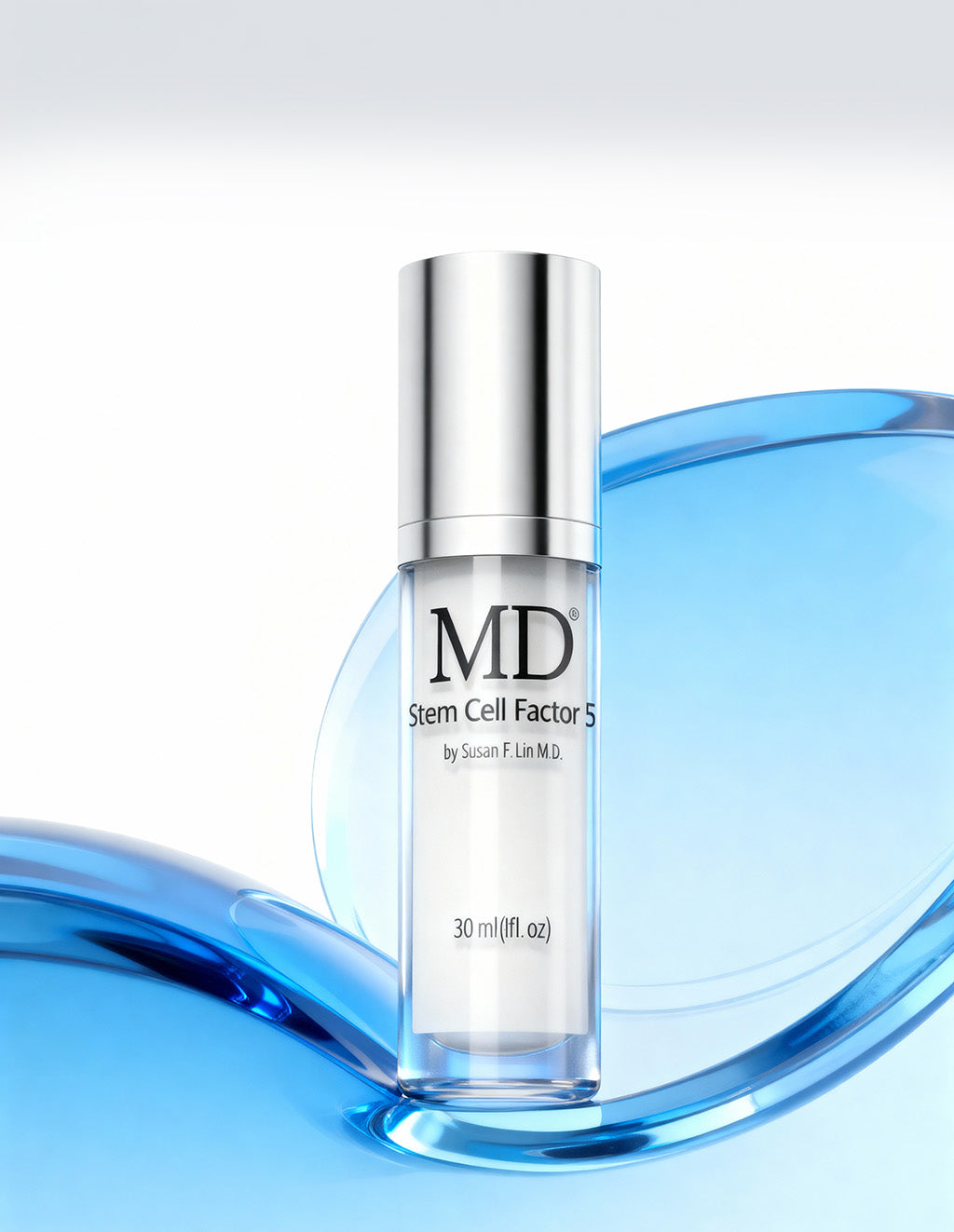
MD Stem Cell Factor 55 was formulated by Dr. Susan Lin, M.D. around the growth-factor anti-aging premise: deliver growth-factor-class signaling support to the skin to restore the signaling environment that age has compromised. It is a physician-formulated, drug-free, growth-factor serum intended as a daily anti-aging topical.
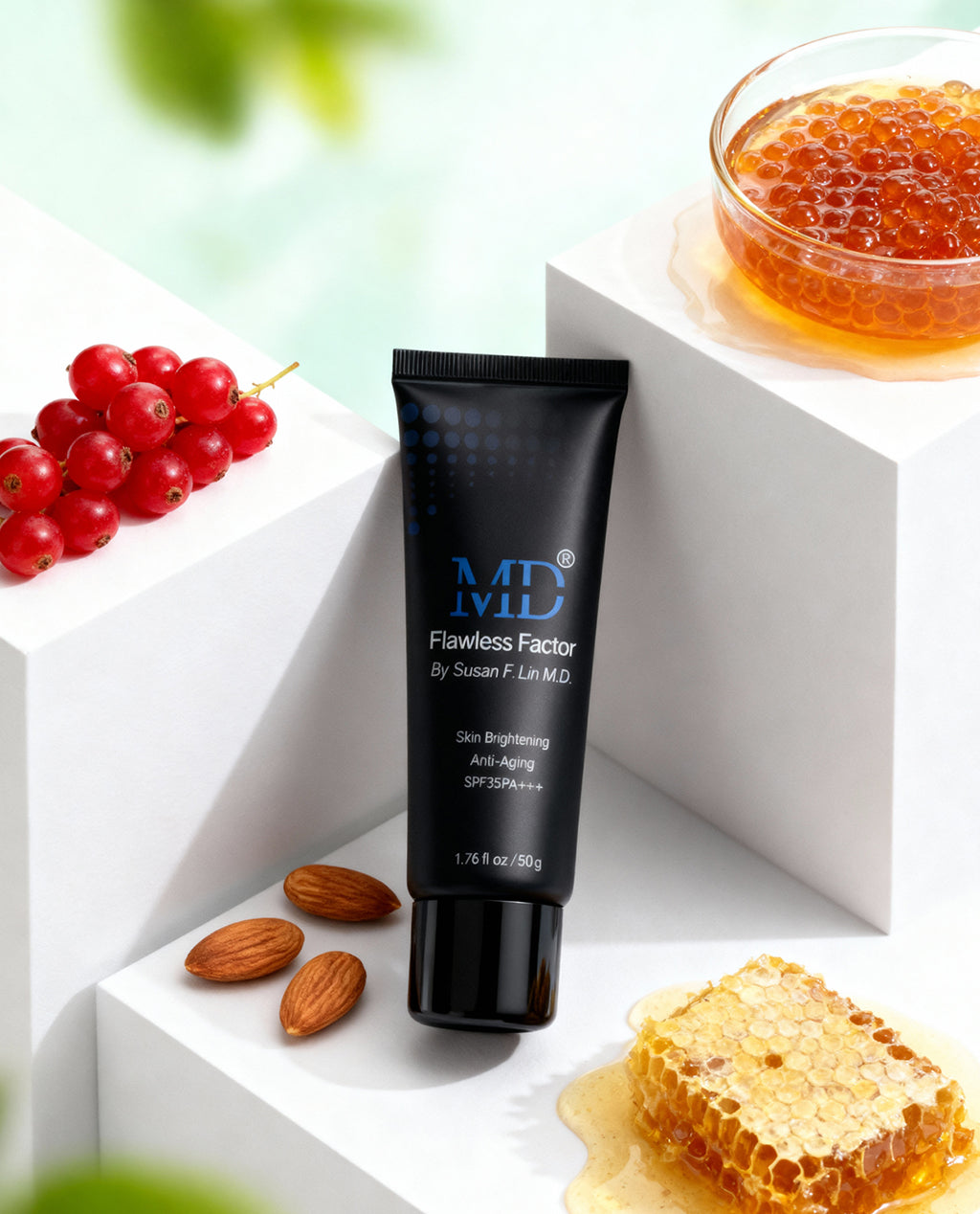
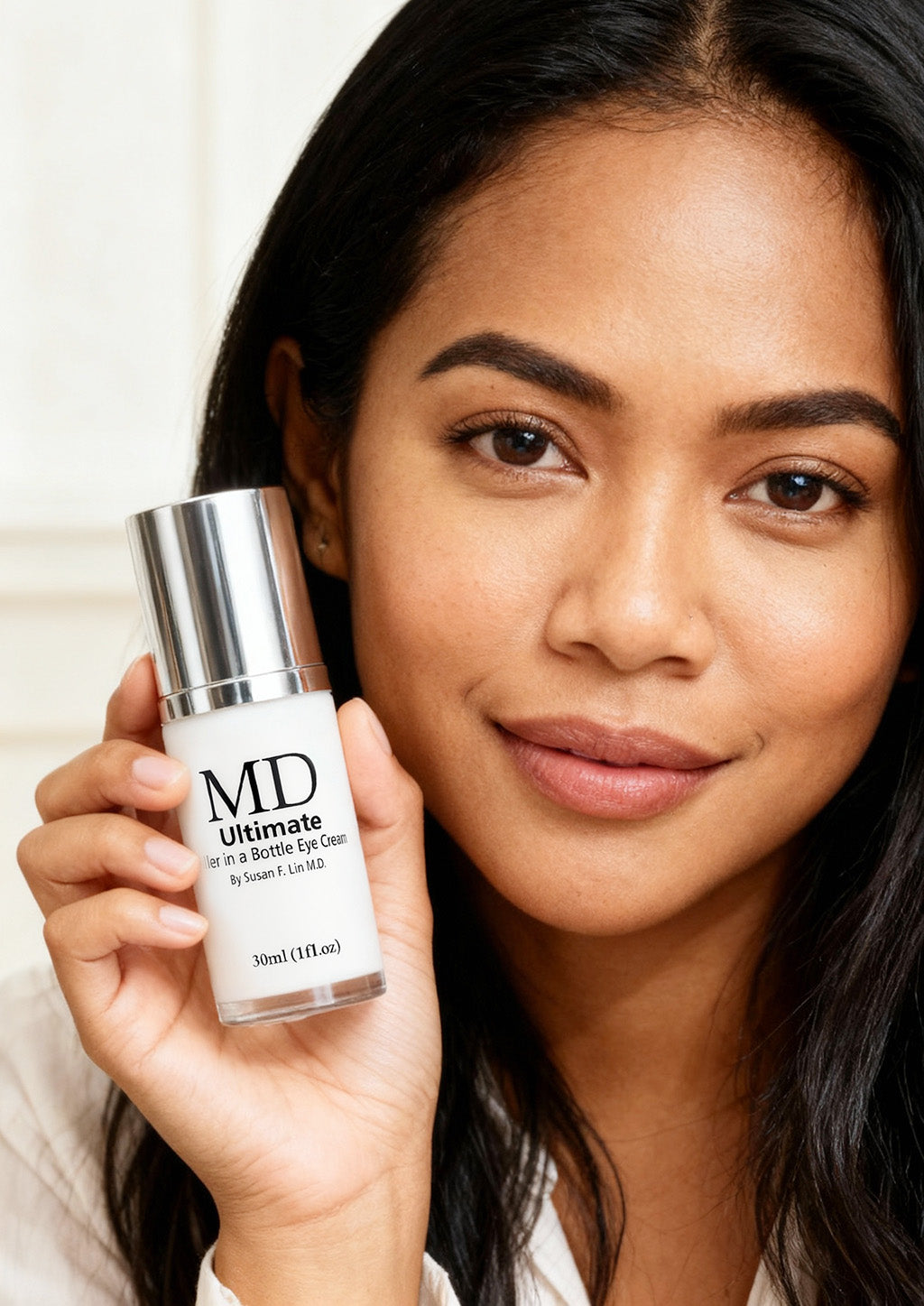
The serum is part of the broader MD Skin™ system — which also includes complementary actives in MD Vitamin C Serum (antioxidant + cofactor for collagen synthesis), MD Ultimate Eye Cream, MD Flawless Factor BB cream, MD Extra White brightening, and MD Ultimate Anti-Aging Mineral Sunblock. The system was designed for women in the 30s-60s demographic who want a coordinated, physician-formulated, drug-free skincare approach.
Operating under the federally registered MD® trademark (USPTO Reg. No. 4,471,494, Class 3 cosmetics and Class 5 pharmaceuticals/dietary supplements) owned by La Canada Ventures, Inc. Manufactured in the USA in an FDA-registered, GMP-compliant facility.
How to use MD Stem Cell Factor 55
- Cleanse skin gently and pat dry
- Apply a small amount to face and neck — pat in with fingertips
- Allow to fully absorb (about 1-2 minutes) before layering anything else
- Follow with moisturizer
- In the morning, finish with broad-spectrum sunscreen (SPF 30+)
- Use daily for at least 8-12 weeks to assess effect
How MD Stem Cell Factor 55 fits in a complete regimen
- Morning: Cleanse → MD Vitamin C Serum → MD Stem Cell Factor 55 → moisturizer → MD Ultimate Anti-Aging Mineral Sunblock SPF 50
- Night: Cleanse → MD Stem Cell Factor 55 → MD Ultimate Eye Cream → moisturizer
- Weekly: Add MD Enzyme Peeling Mask 1-2 times per week for gentle exfoliation
Realistic timeline and expectations
Topical anti-aging skincare operates on weeks-to-months timelines. With consistent daily use:
- 2-4 weeks: Skin feels smoother, more hydrated; improved tone uniformity
- 6-8 weeks: Visible improvement in fine line appearance; firmer texture
- 12-16 weeks: Sustained improvement; the full effect of consistent daily use becomes apparent
- Beyond 16 weeks: Continued benefit with ongoing use; cumulative effect over months and years
Be skeptical of any topical promising dramatic results in days; the underlying skin biology operates on weeks-to-months timelines.
Frequently asked questions
What are growth factors in skincare?
Naturally occurring signaling proteins (EGF, TGF-beta, IGF, VEGF, FGF, PDGF, KGF) that communicate instructions between skin cells, driving fibroblast activity, collagen synthesis, keratinocyte renewal, and barrier function.
What does MD Stem Cell Factor 55 do?
Delivers growth-factor-class signaling support topically to restore the signaling environment that age has compromised. Supports fibroblast activity, collagen/elastin synthesis, and barrier function.
Are growth factor serums proven?
The dermatocosmetic literature supporting growth factor biology in skin aging is substantial. The topical growth factor serum category is well-established in physician-grade skincare. Individual product evidence varies.
How do I use MD Stem Cell Factor 55?
Apply to clean, dry skin morning and/or night. Pat in, allow to absorb, then follow with moisturizer and (morning) sunscreen.
Is it safe during pregnancy or breastfeeding?
Discuss any new active topical with your physician during pregnancy or breastfeeding.
Can I use this with retinol?
Yes — separate by time of day for best results: growth factor serum morning, retinol night, with appropriate moisturization.
About the Author
Susan F. Lin, M.D. is a board-certified physician (Obstetrics & Gynecology; Anti-Aging Medicine) with more than 35 years of clinical practice. She is the creator of the MD® family of physician-formulated brands — MD Hair™, MD Lash Factor®, MD Skin™, MD Wellness™ — and a contributing author to Harry’s Cosmeticology, 9th Edition.
Related reading
- What to Look for When Buying a Vitamin C Serum
- Experience the Future of Skincare with MD Stem Cell Factor 55
- Beyond Brightening: The 30-Day Protocol for Ageless Skin
- Shop the MD Skin™ collection
Featured products
- MD Stem Cell Factor 55 — Physician-formulated growth-factor anti-aging serum.
- MD Vitamin C Serum — Companion antioxidant + collagen cofactor.
- MD Ultimate Anti-Aging Mineral Sunblock SPF 50 — Daily UV defense.
- MD Ultimate Eye Cream — Targeted periorbital care.
Educational only; not a substitute for individualized medical advice. Discuss any new active topical with your physician or dermatologist, especially if you have known sensitivities, are pregnant or nursing, or have a chronic skin condition.